PAKISTAN/SYRIA
PAKISTAN/SYRIA
Two countries with rich history beautiful heritage. Quite similar but may be more different than you could think. Just as many things have changed and evolved over time, these countries have also changed so much that traces of their pasts have been shadowed.
Pakistan

Where is it? Pakistan is a country located in the south of Asia. It shares borders with the Arabian sea to the south; India to the east; Afghanistan to the west (longest border); Iran to the southwest and China to the northeast.
What does the flag represent? The two colors (Green and White) in the flag represent the majority and minorities. For instance, green color is the Muslim majority, whilst the white color represents the non-Muslim minorities. Crescent Moon and Star represent Traditional symbols of Islam, reflecting the country’s close connection to the religion.
(Meaning of the Pakistan Flag Colors and Their Significance)
Official languages: Pakistan has two official languages other than that between 70 and 80 languages spoken in Pakistan. Urdu is the national and one of the two official languages. English is the other official languages.

Population: The population of Pakistan in 2024 is 252.2 million. And the median age is around 20.4. Population in Pakistan is varied around the four provinces. As the population is uneven around the country. Punjab is the most densely populated province of all four provinces. Whereas Balochistan which is the largest province has the least population.

GDP of Pakistan: The GDP (Gross Domestic Product) of Pakistan in 2023 was 338.37 Billion USD. In the previous year 2022 it was 374.79 billion which is relatively the most it has been. Punjab contributes most of the GDP of Pakistan as it makes about 53% of the national income.

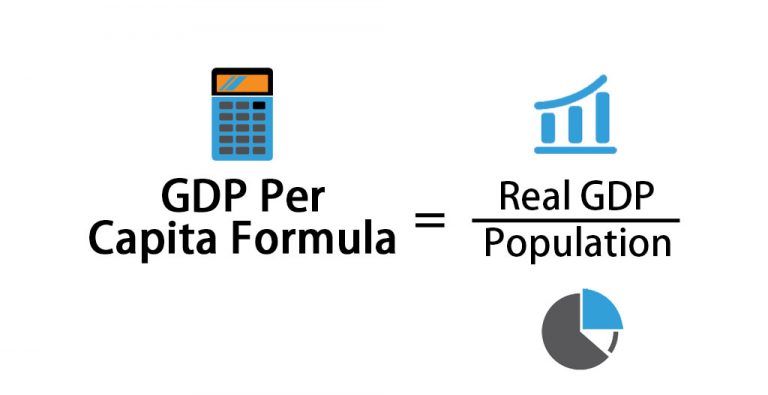
GDP per Capita: The GDP per Capita of Pakistan in 2023 was 1,407 USD. According to the World Bank collection of development indicators, compiled from officially recognized sources.

GINI Coefficient: Pakistan’s GINI coefficient is a measure of income inequality in the country and is estimated to be 0.31 in 2024.

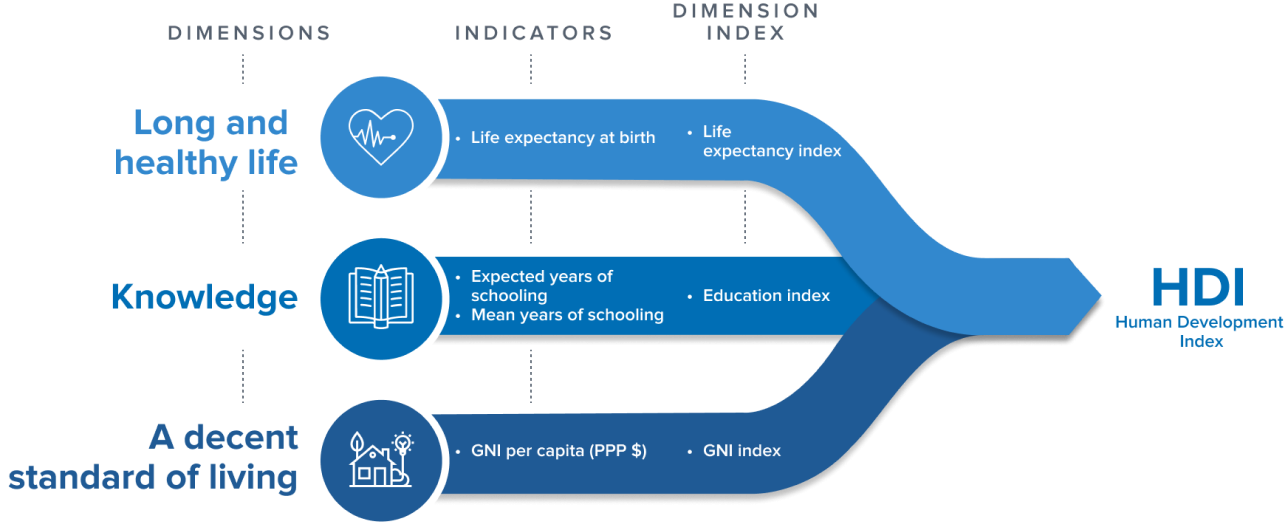
HDI value and rank: Pakistan’s HDI value for 2022 is 0.540 which if placed in the low human development category-positioning it at 161 out of 192 countries and territories. In 2022, Pakistan had a Human Development Index (HDI) value of 0.540 with a global ranking of 161 out of 192 countries. In 2023, the country dropped three places to 164 in the global ranking.

Infant Mortality Rate: The current infant mortality rate for Pakistan in 2024 is 54.657 deaths per 1000 live births, a 2.01% decline from 2023.

Life expectancy: The current life expectancy for Pakistan in 2024 is 67.94 years, a 0.22% from 2023. This rate is expected to increase in the coming years. Increase.

Literacy Rate: According to recent reports, Pakistan’s literacy rate is almost 58% as of 2019.
Levels of Primary Education: Primary education lasts eight years in Pakistan. Ages five to thirteen complete the following two phases.
- Lower primary education (primary school grade 1-5)
- Upper primary education (middle school grade 6-8)
There are two types of secondary education:
- General secondary education (duration: 4 years). This type of secondary education consists of 2 phases:
- Lower general secondary education which is concluded with exams for a secondary school certificate/Matriculation certificate And
- Upper general secondary education which is concluded with exams for a higher secondary school certificate/Intermediate school certificate.

Inflation: Pakistan’s annual consumer price inflation slowed down to 6.9% in September 2024.
Exports: Pakistan’s export of sports goods increased by 4.27% during the first two months of the current Fiscal Year (2024-2025) as compared to the exports in the corresponding period of the last year. The country exported sports goods worth $61.982 million during July-August FY25 as compared to exports of $59.442 million during July-August FY24, showing growth of 4.27 percent, according to the data released by the Pakistan Bureau of Statistics (PBS).

Humanitarian Situation: Pakistan faces challenges like inflation and racial discrimination against certain communities.

Natural Resources: Pakistan is rich in natural resources, including abundant coal deposits, significant oil and gas reserves, diverse forestry, extensive mining opportunities, fertile land, uranium resources and ample freshwater supplies.
Syria:

Where is it? Syria is in West Asia, in the Eastern Mediterranean and the levant. Syria, country located on the east coast of the Mediterranean Sea in southwestern Asia. Its area includes territory in the Golan Heights that has been occupied by Israel since 1967. The present area does not coincide with ancient Syria, which was the strip of fertile land lying between the eastern Mediterranean coast and the desert of northern Arabia. The capital is Damascus (Dimashq), on the Baradā River, situated in an oasis at the foot of Mount Qāsiyūn.
Syria shares borders with: Turkey to the North; Iraq to the Southeast and East; Jordan to the South; Lebanon and Israel to the Southeast and The Mediterranean Sea to the West.
Official Language: Arabic is the official language of Syria, which is spoken by all Syrians. Kurdish, Armenian, Aramaic, Circassian, English and French are also spoken in Syria. Arabic, spoken by one hundred million people worldwide, has many dialects that are so distinctive that people living as little as three hundred miles apart may not be able to understand one another. Written Arabic, on the other hand, is classical Arabic and is the same for all Arabic writers the world over. It is written and read from right to left. Oddly, Syrians do not use standard Arabic numerals but instead use numerals that came to them from India.

Population: Based on the projections of the latest United Nations Data, the current population of Syria is 24,672,80o. Majority is Muslims, which is 87%, 10% Christians, 3% Druze and 3% other religions.

GDP: Syria’s GDP in 2021 is 8.97 billion USD. Syria’s GDP for 2024 is projected to be significantly lower. The country’s economic situation has been deteriorating due to ongoing conflict and other challenges. The GDP has been declining since 2022. The World Bank projects that Syria’s real GDP will contract by 1.5% in 2024.

GDP per Capita: Syria’s GDP (Gross Domestic Product) per Capita is expected to reach 781.90 USD by the end of 2024. The GDP per capita in Syria was last recorded at 744.67 US dollars in 2021.

GINI Coefficient: Syria’s GINI Coefficient in 2022 was 26.6% which is a decrease from 40.4% in 2009. Globally, Syria’s Gini coefficient places it among countries with moderate income inequality.

HDI value and Rank: Syria’s HDI (Human Develpoment Index) value in 2021 was 0.577, which placed the country in the medium human development category. This places Syria at 150th out of 191 countries and territories. Syria’s Human Development Index (HDI) value declined from 0.660 in 2010 to 0.577 in 2021.

Infant Mortality: Syria’s infant mortality rate in 2022 was 17.8 deaths per 1000 live births. The infant mortality rate refers to the number of newborns not expected to survive past 12 months after birth.

Life Expectancy: The current life expectancy for Syria in 2024 is 76.411 years , a 0.46% increase from 2023.

Literacy rate : In Syria adult literacy is at 94.42%, which was last recorded in 2021.

Primary Education: Schooling in Syria is divided into six years of primary education (ages 6 to 12), followed by 3 years of intermediate education (ages 12 to 15), followed by secondary education is of 3 years (ages 16 to 18) grades 10-12.

Inflation: Specific inflation data is not available, but the economy has been severely affected by the conflict.

Export: Syria’s Export data is limited due to the ongoing conflict.
Humanitarian situation: Over 6.7 million Syrians were internally displaced as of 2022, with 14.6 million people in need of humanitarian assistance.

Natural Resources: Natural resources include petroleum, phosphates, chrome and manganese ores, asphalt, iron ore, rock salt, marble, gypsum, and hydropower, each serving as vital commodities for various industries and economic development.

SIMILARITIES:
- Islamic influence: Both countries have significant Islamic heritage. And both have a large population of Muslims. Both have law stating that only a Muslim can sit in as a ruler. Syria being the center of Islamic culture during the Umayyad Caliphate has influenced Pakistan a lot.
- Humanitarian: Both countries need humanitarian assistance as Pakistan is facing poverty, inflation and racial discrimination. Whereas Syria’s condition is even worse as it has a civil war going on, there is a huge decrease in GDP and has huge number of civilians migrating to other countries to seek refuge.
- Political Relations: Syria and Pakistan established diplomatic relations in 1948.They have cooperated In Military and Political Fields.
- Sectarian: Both countries have sects in the Muslims. Majority are Sunnis, while there are other sects as well. This Sectarian divisions effect both these counties external and internal policies.
DIFFERENCES:
- Language: Pakistan and Syria’s official languages and regional languages and different than other that having English common all other languages are entirely different. Even though Arabic is thought in Pakistan, but it is only thought to an extent and not for common daily use.
- Infant Mortality: Syria has a relatively low infant mortality rate while Pakistan has a high infant mortality rate.
- Life expectancy: Syria has a higher life expectancy than Pakistan.
- Economic: Pakistan has a better economic situation than Syria.
- Exports: Syria is not having any exports because of the ongoing civil war whilst Pakistan has a fairly good export.
- Population: Pakistan’s population is ten times that of Syria’s population.
Pakistan and Syria
Pakistan and Syria are most different countries as their current differences are huge. But because their religious and historical similarities are evident, they may be similar in various aspects as well.
Pakistan’s Map:

Syria’s Map:






/gdp-increase-636251500-c69345ee97ba4db99375723519a2c1bd.jpg)
